
Pharmacy-Based Administration of Long-Acting Injectables: A Sharp Idea
This practical training prepares pharmacists to administer long-acting injectable medications in the pharmacy setting and support patients receiving injectable therapies as part of ongoing disease management.
Designed as a microcredential program, this course awards a digital badge upon successful completion and focuses on the clinical, operational, and workflow considerations associated with pharmacy-based injectable services.
The program explores best practices for the administration of long-acting injectables across a variety of therapeutic areas while emphasizing patient safety, adherence, and continuity of care.
Topics covered include:
- Overview of long-acting injectable therapies and their role in patient care
- Storage, handling, preparation, and administration requirements
- Injection techniques and administration considerations for various products
- Workflow integration and operational considerations for pharmacy practice
- Patient counseling, monitoring, and follow-up care
- Documentation and billing considerations related to injectable services
- Strategies to support medication adherence and continuity of therapy
- Safety considerations, adverse effect monitoring, and error prevention
Pharmacists will also develop practical skills in evaluating injectable medication requirements, preparing products appropriately, counseling patients on treatment expectations, and implementing pharmacy-based administration services within practice workflow.
This training is designed to help pharmacists expand clinical service offerings, improve patient access to injectable therapies, and support long-term treatment adherence and outcomes.
Earn your microcredential and build confidence in providing pharmacy-based long-acting injectable services – enroll today.
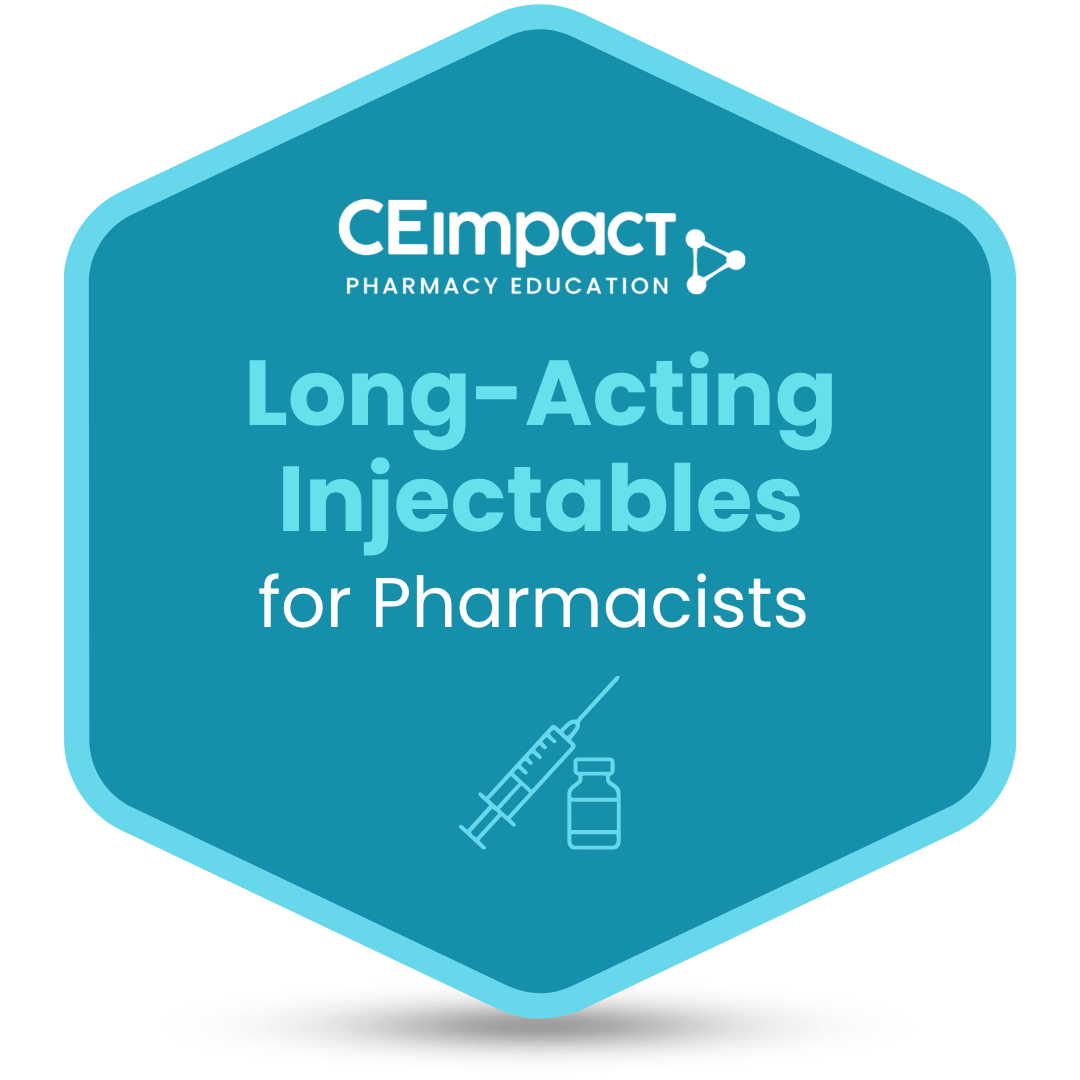
Claim Your Badge
You will receive an email from Credly (our credential partner), after you complete the course, inviting you to claim your digital badge for Long-Acting Injectables - Pharmacist. This will allow you to easily share your achievement with colleagues, managers, and your professional network on LinkedIn and other platforms. When you receive the email, please click the button and create an account on Credly.com so that you can “accept” the badge.
Need help? Find a step-by-step tutorial video at this link.
 CEImpact is accredited by the Accreditation Council for Pharmacy Education as a provider of continuing pharmacy education. Obtain CPE credit by completing the course, followed by the exam and evaluation (if applicable). Once successfully completed, your course will appear in your Completed Courses tab. Access your CPE statement of credit at