
Hormone Harmony: The Pharmacist's Role in Managing Perimenopause and Menopause
This course prepares pharmacists to support patients navigating perimenopause and menopause through evidence-based education, symptom management strategies, and individualized patient care.
Designed as a microcredential program, this course awards a digital badge upon successful completion and focuses on the pharmacist’s expanding role in women’s health and hormone-related care.
The program explores the physiologic changes associated with perimenopause and menopause, common symptoms and treatment options, and counseling strategies to support informed, patient-centered decision-making.
Topics covered include:
- Physiology and hormonal changes associated with perimenopause and menopause
- Common symptoms, including vasomotor, mood, sleep, and genitourinary concerns
- Hormone therapy options, benefits, risks, and monitoring considerations
- Non-hormonal and lifestyle-based management strategies
- Patient assessment and individualized treatment considerations
- Counseling approaches to support adherence, education, and shared decision-making
- Special considerations for patients with chronic conditions or contraindications
- Strategies for incorporating menopause-related care into pharmacy practice
Pharmacists will also develop skills in evaluating symptom burden, identifying appropriate treatment options, counseling patients on therapeutic expectations and safety, and supporting ongoing follow-up care.
This course is designed to help pharmacists expand women’s health services, improve patient access to evidence-based menopause care, and support patients during a significant stage of life and health transition.
Earn your microcredential and strengthen your role in menopause and women’s health care – enroll today.
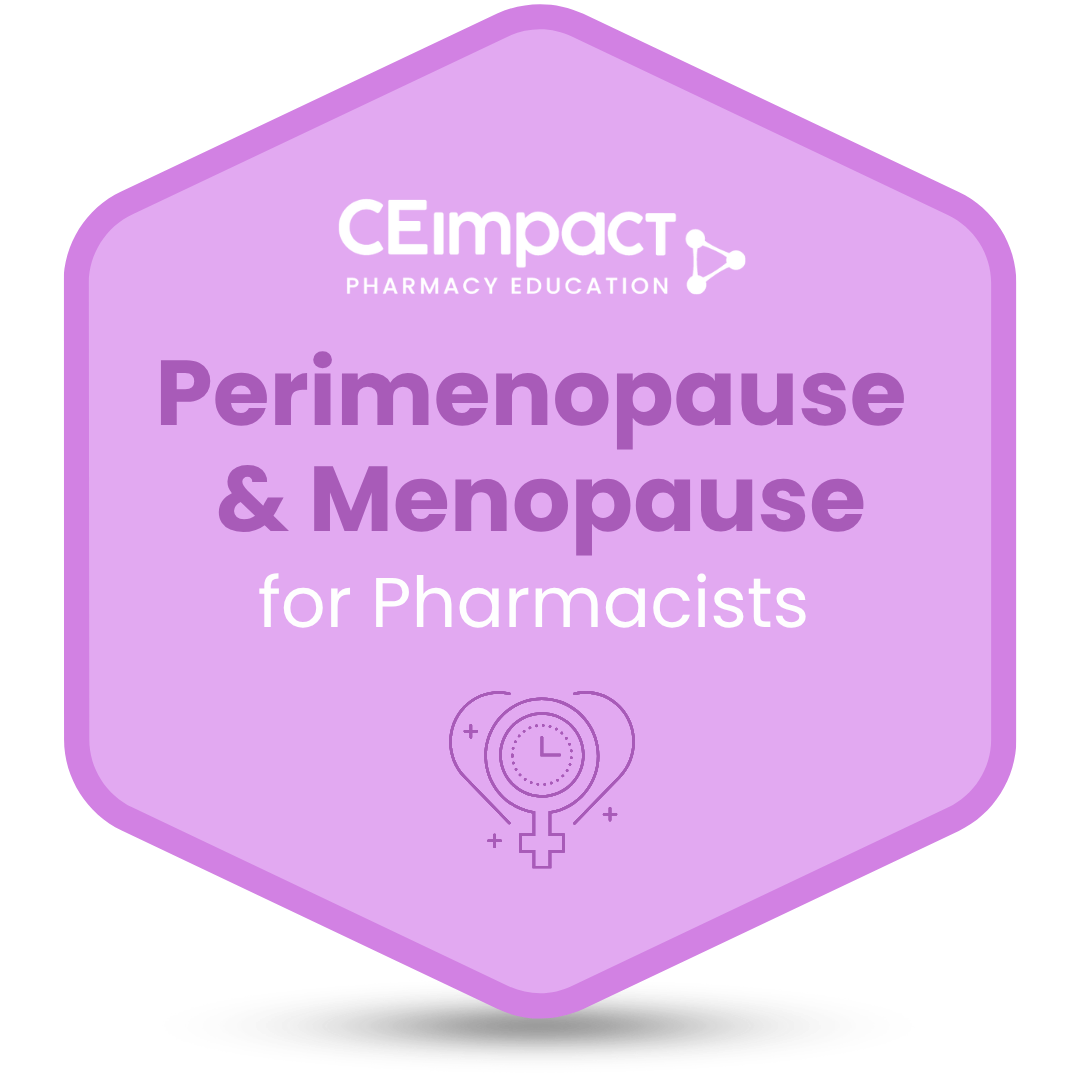
Claim Your Badge
You will receive an email from Credly (our credential partner), after you complete the course, inviting you to claim your digital badge for Perimenopause and Menopause - Pharmacist. This will allow you to easily share your achievement with colleagues, managers, and your professional network on LinkedIn and other platforms. When you receive the email, please click the button and create an account on Credly.com so that you can “accept” the badge.
Need help? Find a step-by-step tutorial video at this link.
 CEImpact is accredited by the Accreditation Council for Pharmacy Education as a provider of continuing pharmacy education. Obtain CPE credit by completing the course, followed by the exam and evaluation (if applicable). Once successfully completed, your course will appear in your Completed Courses tab. Access your CPE statement of credit at