
Beyond Prescriptions: A Pharmacists' Guide to Functional Medicine
This course is a practical guide to functional medicine, introducing pharmacists to its core principles and their application within patient-centered pharmacy practice.
Designed as a microcredential program, this course awards a digital badge upon successful completion and focuses on practical strategies for supporting whole-person care through lifestyle, nutrition, and evidence-based therapeutic approaches.
The program explores how functional medicine frameworks can complement traditional pharmacy practice by helping pharmacists identify root contributors to chronic health conditions and support long-term patient wellness.
Topics covered include:
- Core principles and foundations of functional medicine
- Systems-based approaches to chronic disease management
- Lifestyle factors impacting health, including nutrition, sleep, stress, and physical activity
- Evidence-based supplementation and therapeutic considerations
- Patient assessment and identification of modifiable risk factors
- Strategies for patient education, goal setting, and behavior change support
- Collaborative care approaches within interdisciplinary healthcare teams
- Opportunities to incorporate functional medicine principles into pharmacy services
Pharmacists will also develop skills in evaluating lifestyle-related contributors to disease states, supporting individualized patient care plans, and integrating wellness-focused interventions into existing pharmacy practice models.
This training is designed to help pharmacists expand patient care services, strengthen chronic disease support strategies, and enhance patient engagement through a more holistic approach to care.
Earn your microcredential and explore practical applications of functional medicine in pharmacy practice – enroll today.
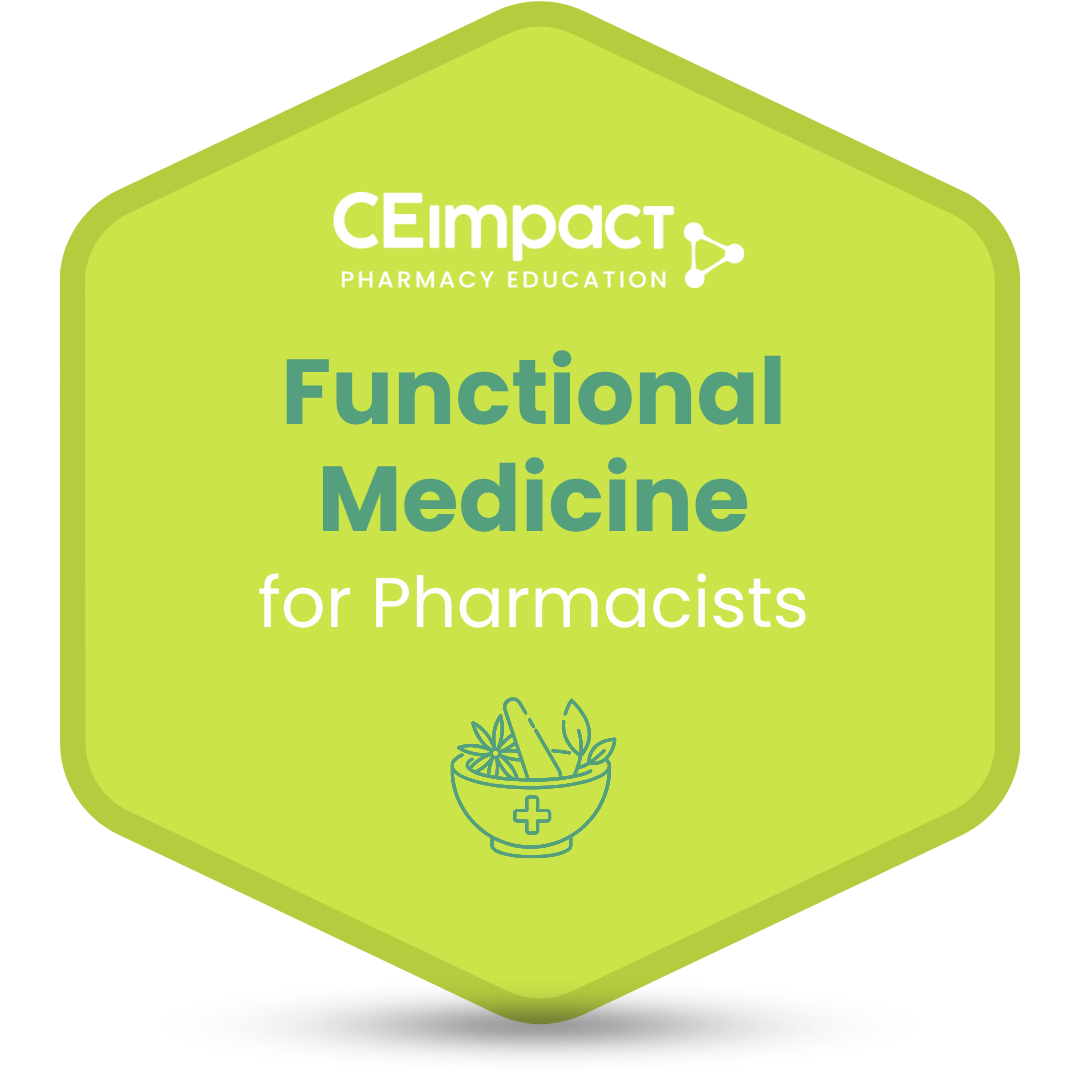
Claim Your Badge
You will receive an email from Credly (our credential partner), after you complete the course, inviting you to claim your digital badge for Functional Medicine - Pharmacist. This will allow you to easily share your achievement with colleagues, managers, and your professional network on LinkedIn and other platforms. When you receive the email, please click the button and create an account on Credly.com so that you can “accept” the badge.
Need help? Find a step-by-step tutorial video at this link.
 CEImpact is accredited by the Accreditation Council for Pharmacy Education as a provider of continuing pharmacy education. Obtain CPE credit by completing the course, followed by the exam and evaluation (if applicable). Once successfully completed, your course will appear in your Completed Courses tab. Access your CPE statement of credit at